
Mayab’: Live Folktrónica
with Aurora Nohemi
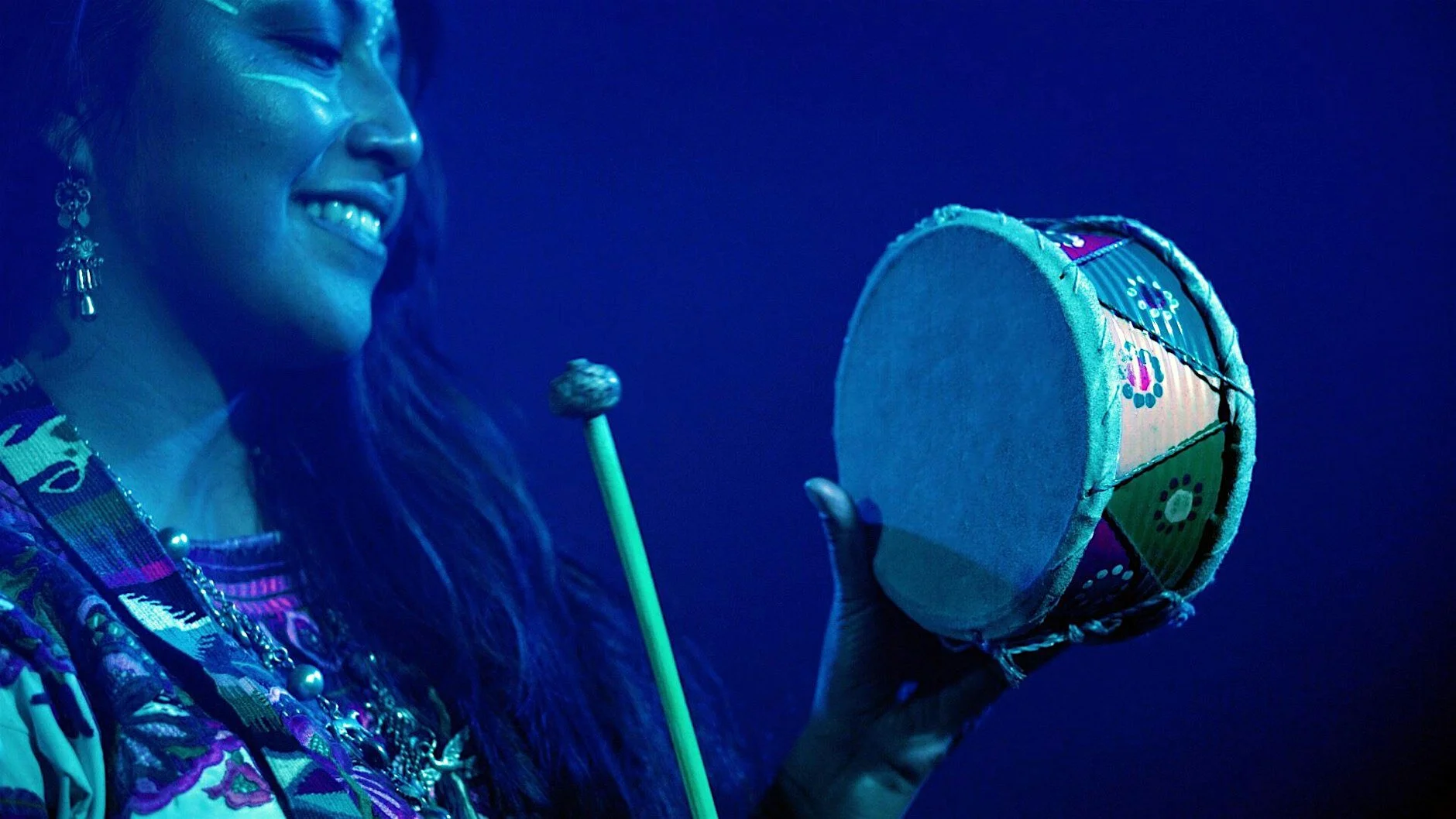
Shatto Chapel
First Congregational Church of Los Angeles
540 South Commonwealth Avenue Los Angeles, CA 90020
Sunday, October 25th
A vibrant sonic concert where ancestral Maya traditions meet the pulse of contemporary electronic music
Mayab’: Live Folktrónica Performance invites you into a vibrant sonic world where ancestral Maya traditions meet the pulse of contemporary electronic music.
In her immersive 30–40 minute performance, Aurora Nohemi's original compositions weave together live vocals, guitar, ukulele, skin drums, tzijolaj, electronic sequences, and atmospheric soundscapes. Rooted in ancestral memory and alive in the present, Mayab’ explores identity, land, nature, and the enduring cultural traditions of the Maya people.
Every performance is a one-of-a-kind experience, shaped by improvisation, live interaction, and the energy of the moment. Come listen, move, and journey between ancient sounds and new worlds.
Mayab’: Live Folktrónica Performance es un concierto en vivo de aproximadamente 30 a 40 minutos que entrelaza música maya contemporánea, paisajes sonoros y elementos electrónicos con instrumentos acústicos tradicionales.
A través de composiciones originales, el proyecto crea un diálogo entre la memoria ancestral y las sonoridades actuales, explorando la identidad, el territorio, la naturaleza y la continuidad cultural del pueblo maya.
La presentación combina secuencias electrónicas originales con interpretación completamente en vivo de voz e instrumentos, incluyendo guitarra, ukelele, tambores de piel y tzijolaj. Cada interpretación incorpora improvisación e interacción con los instrumentos, haciendo que cada concierto sea una experiencia única e inmersiva.
-
The Books They Could Not Burn
I’ve had the pleasure of learning about Aurora and her work over the last six months and have continually been impressed by the power of her interconnected work as an architect, textile researcher, poet, and musician over the last few months. During our time together I’ve learned of a central similarity about the tradition of embroidery in Guatemala and Aurora’s practice as a musician: that both of these creations are works of resistance and reclamation – resistance against colonialism and a reclamation of history, wisdom, language, spirit, and connection to the earth.
As Aurora has said, “Mayan textiles are the books they could not burn.”
The güipil, the traditionally embroidered blouses worn my indigenous women from Central America, are as varied and intricate as the land itself, changing from region to region, full of symbols and signs reflecting local traditions, beliefs, and the ecology of the indigenous people. The modern nation-state has reduced the myriad colors of Guatemala’s land, the flowers, the mountains, the birds, the trees, to a stark blue and white. But the people know, they wear their history with pride and celebrate the sites of the ancients that still loom over the land. They look at the sky with wonder and wear the pattern of stars woven into the fabric of their clothes.
Aurora has taken these textiles, these symbolically rich patterns that reference both the scientific knowledge of the Maya as well as their deep connection to the land and the sky, and mapped them directly onto the x-y axis of the Western musical staff creating songs informed directly by the mathematics embedded in their clothes. And this influence is bi-directional, a work of creation as interconnected as the elements of the land that presents a question of what weaving is possible when informed by the structure and sounds of today’s music.
It’s no accident that this event coincides with Dia De Los Muertos. Like that holiday, this concert is an opportunity to remember and connect – remember where we came from, who came before us, and who we are because of them. It’s an opportunity to connect with each other strengthened by not only the understanding of our shared origin but our collective effort to build a future together, one that is free and filled with joy, a peaceful future where we are united by a shared love of this earth that sustains us all.
_________
Los libros que no pudieron quemar
Durante los últimos seis meses, he tenido el placer de conocer a Aurora y su trabajo; me ha impresionado constantemente la fuerza de su labor interdisciplinaria como arquitecta, investigadora textil, poeta y música. En el tiempo que hemos compartido, he descubierto un punto de convergencia fundamental entre la tradición del bordado en Guatemala y la práctica musical de Aurora: ambas formas de creación constituyen actos de resistencia y reivindicación; resistencia frente al colonialismo, y reivindicación de la historia, la sabiduría, la lengua, el espíritu y la conexión con la tierra.
Como bien ha señalado Aurora: «Los textiles mayas son los libros que no pudieron quemar».
El güipil —la blusa tradicionalmente bordada que visten las mujeres indígenas de Centroamérica— es tan variado y complejo como el propio territorio. Cambia de una región a otra y está repleto de símbolos y signos que reflejan las tradiciones locales, las creencias y la ecología de los pueblos indígenas. El Estado-nación moderno ha reducido la inmensa paleta de colores de la tierra guatemalteca —sus flores, montañas, aves y árboles— a un austero azul y blanco. Pero los pueblos conservan su memoria: visten su historia con orgullo y celebran los vestigios de sus antepasados, que aún se alzan sobre el paisaje. Contemplan el firmamento con asombro y llevan el diseño de las estrellas entretejido en sus vestiduras.
Aurora ha tomado estos textiles —estos patrones cargados de simbolismo, que aluden tanto al conocimiento científico de los mayas como a su profunda conexión con la tierra y el cielo— y los ha trasladado a los ejes de coordenadas (x-y) del pentagrama musical occidental. Así, ha compuesto piezas inspiradas directamente en las matemáticas que subyacen en sus tejidos. Se trata de una influencia bidireccional: un proceso creativo tan interconectado como los elementos de la propia tierra, que plantea una interrogante sobre qué nuevas formas de tejido son posibles cuando se integran la estructura y los sonidos de la música contemporánea.
No es casualidad que este evento coincida con el Día de los Muertos. Al igual que dicha festividad, este concierto es una oportunidad para recordar y conectar: para rememorar de dónde venimos, quiénes nos precedieron y quiénes somos gracias a ellos. Es una oportunidad para conectar entre nosotros, fortalecida no solo por la comprensión de nuestro origen común, sino también por nuestro esfuerzo colectivo para construir un futuro juntos: un futuro libre y lleno de alegría, un futuro en paz donde nos une el amor compartido por esta tierra que nos sustenta a todos.
Performers
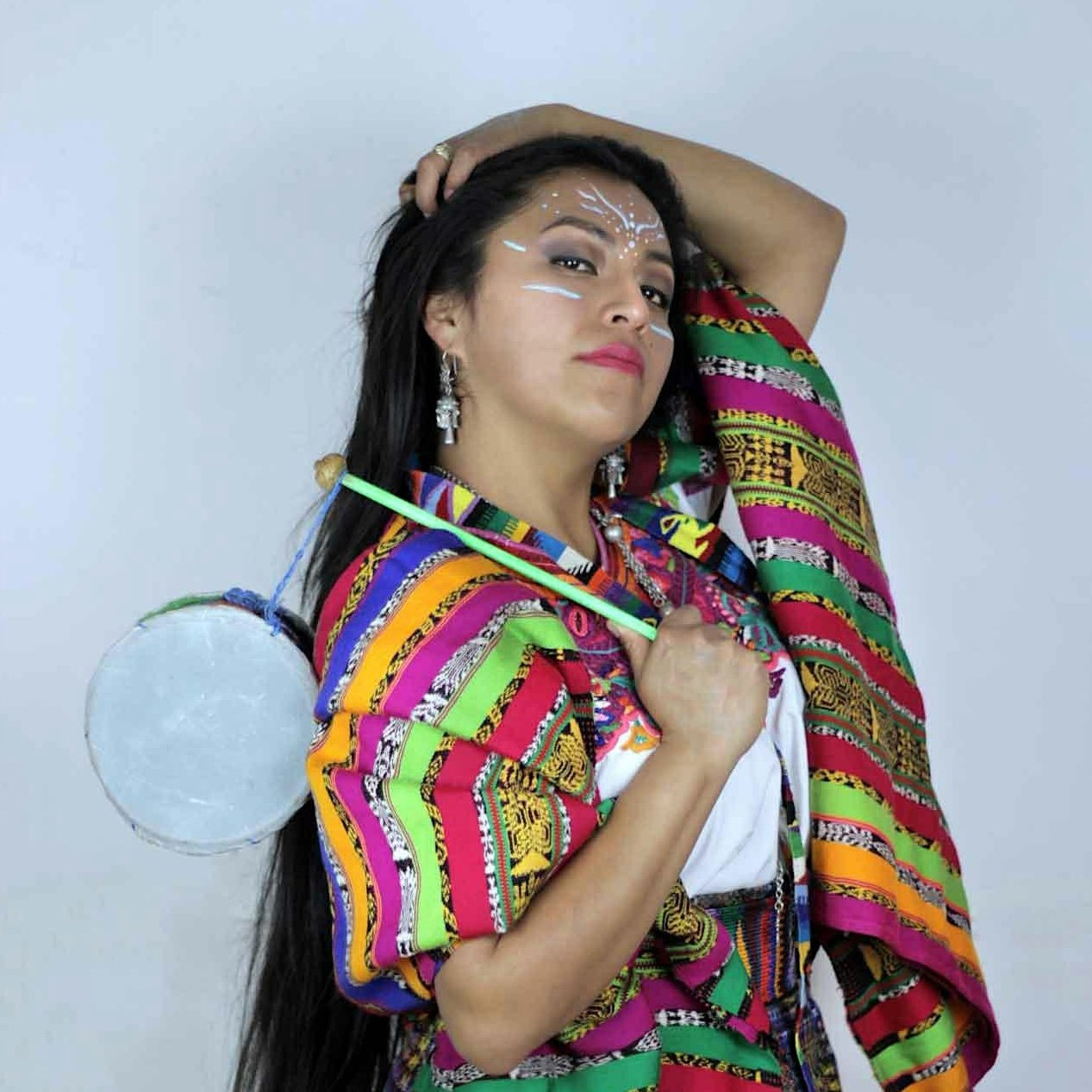
Aurora Chaj
Aurora Chaj is a K’iche’ Maya architect, researcher, musician, and artist from Guatemala. Her multidisciplinary work integrates cultural heritage, research into Maya textile geometry, architecture, and contemporary music, creating connections between ancestral knowledge and artistic expression today.
Through her project Mayab’, Aurora develops original compositions that fuse traditional instruments, vocals, soundscapes, and electronic production. The result is a distinctive artistic language that bridges ancestral memory with contemporary musical expression.
Her artistic and research work has been presented at universities, cultural institutions, and international venues, offering new ways to engage with and experience the Maya worldview through contemporary art.
Aurora Chaj es arquitecta, investigadora, música y artista maya K’iche’ originaria de Guatemala. Su trabajo integra patrimonio cultural, investigación sobre geometría maya en los textiles, arquitectura y creación musical contemporánea.
A través de su proyecto Mayab’, desarrolla composiciones originales que fusionan instrumentos tradicionales, voces, paisajes sonoros y producción electrónica, construyendo un lenguaje artístico que conecta la memoria ancestral con las expresiones musicales del presente.
Su trabajo artístico y de investigación ha sido presentado en universidades, instituciones culturales y espacios internacionales, promoviendo nuevas formas de acercarse a la cosmovisión maya mediante el arte contemporáneo.